)
)
Innovation in Alzheimer’s disease needs more than pharmaceutical solutions
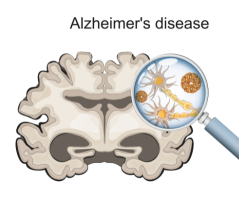
Addressing the challenges of innovation for Alzheimer’s disease requires a fundamental re-evaluation of how we define the condition. Alzheimer’s disease is widely theorised to be caused by a single protein cascade and is usually reported as the primary cause for most dementia worldwide. This focus has galvanised funders, media, and industry and has created a massive research ecosystem across recent decades that has yet to deliver a major impact for patients and their families.
Longstanding evidence shows that dementia in ageing populations is more complicated than having a single cause. Diagnosed individuals mostly have many comorbidities, polypharmacy, and varied neuropathology in their brains, which have a limited relation to the presence or absence of dementia symptoms. Furthermore, natural history studies of people with mild cognitive impairment and confirmed brain amyloid might not progress to dementia syndrome. In older age groups there is an even greater dissociation of the risk of dementia syndrome with such brain findings. In seeking to address the shortcomings of existing approaches, the research focus shifted to better prediction and earlier diagnosis—considered as necessary innovations towards the holy grail of slowing or stopping the disease with medication. According to some recent criteria, even asymptomatic individuals can be diagnosed with Alzheimer’s disease.
This has largely been driven by developments in measuring proteins associated with Alzheimer’s disease pathologies through neuroimaging, in cerebrospinal fluid, and more recently in blood tests. At present there is no evidence that patients benefit from undergoing these tests. Test positivity in select groups is associated with cognitive decline, but it cannot reliably predict clinical prognosis. Despite this, tests like blood p-tau 217 or those aimed at amyloid, have become routine in many specialist settings, even though ranges defined as abnormal have poor correlation with clinical symptoms and outcomes. The presence of these so-called biomarkers has also become a prerequisite to enter amyloid clearance drug trials.
Although trials have successfully cleared amyloid β from the brain, these changes have not yielded meaningful clinical improvements. A recent Cochrane review showed that efficacy of amyloid β drugs falls well below the threshold for minimal clinically important differences. Secondary analyses of these data have failed to demonstrate a correlation between the extent of amyloid removal and cognitive preservation. Similarly, prevention trials involving asymptomatic individuals have yielded no clear clinical benefit. These findings suggest that true innovation in Alzheimer’s disease research requires a decisive move away from this paradigm.